23rd November, 2019
Anywhere but Westminster first popped into my digital awareness in 2015 when the series visited Nuneaton. Why was my hometown making an appearance on a political YouTube series from The Guardian? Who at the socialist paper had thought this place, of all places, worthy of media attention?
The post-mining town in the heart of middle-England rarely gets a look-in from the national news media, other than sporadic mentions when an armed-hostage situation unfolds at the bowling alley, or we once again win the award for ‘most teenage mothers in Europe’. But these mentions were always just that; abstract references to the town as a symbol of social decline in modern Britain. Even when Nuneaton became the target swing seat during the 2015 election, few political commentators in the mainstream media bothered to ask why this nondescript town was playing such a key role in a key election. Even fewer had the incline to trek to North-Warwickshire from the bright lights of Westminster to ask the people there why their life-long Labour votes were being swung over to the Tories.
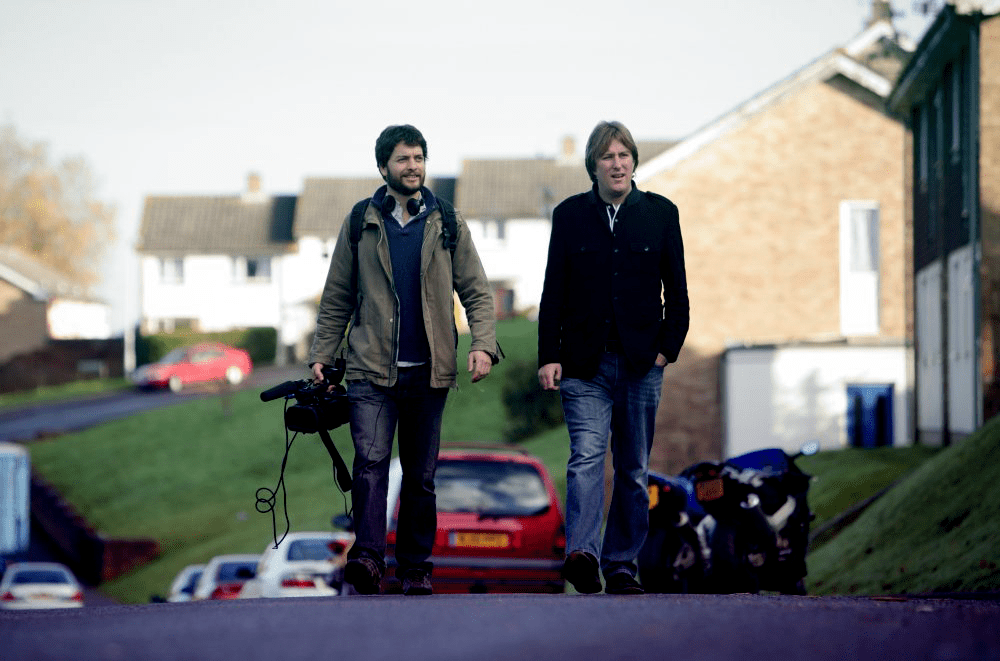
But here was something different. John Harris and his filmmaker John Domokos were actually in Nuneaton, standing on the high-street outside the shopping centre where I’d spent the Saturdays of my youth either working or loitering, and later interviewing the local Labour candidate in the carpark outside the hospital where I was born. Harris was asking real people real questions, trying to gauge their awareness of the importance of their town within the battleground of national politics, and what the state of their lives meant on a larger political and social scale.
Anywhere but Westminster offers a much-needed antidote to the mania of mainstream Brexit media, whose obsession with catastrophizing the fallout from the 2016 referendum has meant it’s lost sight of the true issues at stake. As Harris himself admits, the vox-pop format has its limitations, and hanging around shopping centres in post-industrial towns on weekday afternoons will only provide a selective snapshot of the British electorate. But the people he speaks to hold the types of views that have become the driving force of political discourse in Westminster.
Harris’ major success is to get beneath the sound-bite opinions and ask people about their everyday lives, in an attempt to draw out the direct effects of Tory politics on the ever-abstracted ‘British people’. His subjects’ responses are brutally honest, but equally as funny and charming, and quite often very moving. Austerity has forced upon deprived areas a D.I.Y attitude to social care and welfare. Yet the people, and the films themselves, never verge on sentimentality. The accounts are moving because of the relentless, self-generated hope of these communities, as well as their self-reliance and dignity at a time when they’ve not only been abandoned, but often maligned by the state.
These are the people whose opinions and needs have been left untouched by the establishment for decades. As Labour MP for Stoke-on-Trent North, Ruth Smeeth, notes in the most recent episode, their door-to-door campaign in the lead up to the EU referendum came 15 years too late for many of her constituents, along with the rest of the Leave-voting areas in the Midlands and the North-East. In fact it was in Stoke, a market town all too similar to Nuneaton, where Harris began to suspect that the Remain campaign was in trouble in 2016; something that few left-leaning political commentators had the stomach, or the awareness, to admit.
It’s hard to deny that Harris is doing something vital here. In giving a platform to the reality of these people’s lives he is uncovering the root propellant of Brexit front-bench politics. These are the real faces of the 17.5 million that get banded around so heartlessly in parliament; not valiant patriots or malignant racists but working people who’ve seen their communities and their livelihoods ripped out from underneath them by an increasingly absent and faceless centralised state. And Harris’ approach is delightfully, almost shockingly human. He is non-judgmental, genuinely curious, and his questioning is as compassionate as it is cutting. He recognises the very personal basis upon which people voted out of the EU, and wants to raise that up, rather than continue to repress it, as is the vanguard amongst mainstream news media.
As its title suggests, the show has formal concerns as well, rejecting the American influenced model of sports-style, shiny desk Westminster news media which increasingly privileges spectacle over substance. During October, in the lead up to the Halloween Deadline that never was, Brexit became a spectator sport, with House of Commons debates lauded to the heights of the ‘Super Saturday’ of the 2012 Olympic Games, televised and analysed like a Champions League final, with a game-day countdown to the withdrawal date plastered across every screen. Modern day news media seems to have reached a level of excess that supersedes the realities of the problems at hand. It has now become common to watch political discussions on television that simply run out of things to disagree upon, the demands of the media storm having already chewed up and spat out any certainty that could be anchored about the debate in the first place.
In an unironically academic way, the Brexit-news circus’ grandiosity has eclipsed the political crisis itself, and become the event that is being analysed; distancing the public even further from the intricacies of the events at hand. The only ray of sunshine to emerge from the coverage is the STOP BREXIT man, a regular mainstay of Westminster broadcasts of late, who seems to amuse presenters as much as he irritates their guests. The shouts are relentless, and the news media’s decision to persevere with outside broadcasts within the STOP BREXIT man’s direct line of fire makes the whole spectacle even more absurd, even closer to an episode of The Thick of It, and even further away from journalistic sincerity.
In fact the loss of trust and respect for the institution of democratic politics in the U.K post-Brexit is inseparably wedded to the loss of trust in the news media; not only don’t we trust what our politicians say, we don’t trust what the media reports that they said either. Well researched and independently verified fact can be dismissed as fake news as easily as genuine anger and disappointment can be branded as stupidity. This problem, and the broadcasting of Brexit more generally, seems to point to another huge debate; what is the role of the mainstream news in the digital age? The BBC in particular seem anxiously desperate to keep up with the pace and breadth of the online debate, and our glutinous demand for content has created such a vast array of words dressed up as truths that it has become impossible to separate fact from fiction within the landscape of digital news.
What Anywhere but Westminster does in contrast is to put the brakes on the debate, detoxify it and open it up at the same time; the result being that Harris often receives intelligent and considered responses from people who are so rarely asked the really important questions. The brilliance of the show is its attempt to discover some form of tangible connection between politics and people’s lives. Harris and Domokos visit food banks, Sure Start centres with their budgets obliterated, and the homes of people struggling to survive after the decimation of universal credit (one of whose story was so heart-breaking that the show’s viewers raised £8k to help him stay afloat). Harris is fearless in his search to find an opinion that he hasn’t heard, rather than blindly settling for a reinforcement of his own views or agenda. He visits picking factories dominated by European labourers, and speaks not only to the site managers but to the fruit-pickers themselves.
In short, Harris visits and exposes some of the most deprived areas in the United Kingdom to root out the real consequences of Westminster policy, for the broad range of people who now call these places their homes. The most shocking thing of all is that these are the places where politics no longer reaches, where voting has lost its meaning, and the need for survival has negated political action. These are the places where the Labour party should thrive, but where instead most people don’t vote, and the young, exploited by precarious work contracts and stagnant wages, have never heard of a trade union. Anywhere but Westminster highlights the failure of so many of our vanguard institutions in the wake of the realities of Britain in 2019, but none more so than the Labour party itself. Perhaps this is the most refreshing aspect of it all; an honest review of the workings of the only opposition party in modern Britain, and a possible theory for how it all went wrong.
It is through the show’s honesty, and its unobtrusive form that hope is delivered. Much of this is owed to the ‘Behind the Scenes’ aspect of the films. As Harris and Domokos say in their Q and A video, “the journey is the story”, and theirs is a journey that the majority of the news media, let alone mainstream politicians, failed to undertake during, before or after the EU referendum, visiting some parts of the country that look so neglected they could be pieces of footage from the years after the Second World War. The shooting style is cinematic and at times quite symbolic and poignant; an art that the television news segment seems to have lost, or perhaps never even attempted in the first place.
The breaking of the news media fourth wall, by showing the failures of the vox-pop endeavour as well as its successes, adds some much needed humility to the Brexit debate. The show of course benefits from its ignorance of impartiality – Harris’ announcement that the film is for The Guardian evokes a range of responses from the public – as well as its relative stylistic freedom as an online production. The result is a vision of how we could all maintain some sanity, or as Harris puts it after a poignant conversation with Ruth Smeeth, some civility, throughout what is looking likely to be another five years of Brexit debate. Anywhere but Westminster reflects the absurdity of ‘Brexit Britain’, its politics and its media institutions as well as the generosity and endurance of the British people. It is the Brexit news coverage we deserve.
This article was written in late November 2019, before the Tory landslide in December, before the coronavirus madness from March 2020, and back when I was much more of a lefty than I can claim to be now. I still love this show – they revived it for corona times – and stand by much of what I wrote here. If anything, the Covid-19 situation has only exacerbated the spectacle-driven and hollow nature of mainstream political commentary and Anywhere But Westminster still stands as the most viable antidote to all of this.
 The Jaded Optimist