How my smart watch triggered my anxiety nightmare
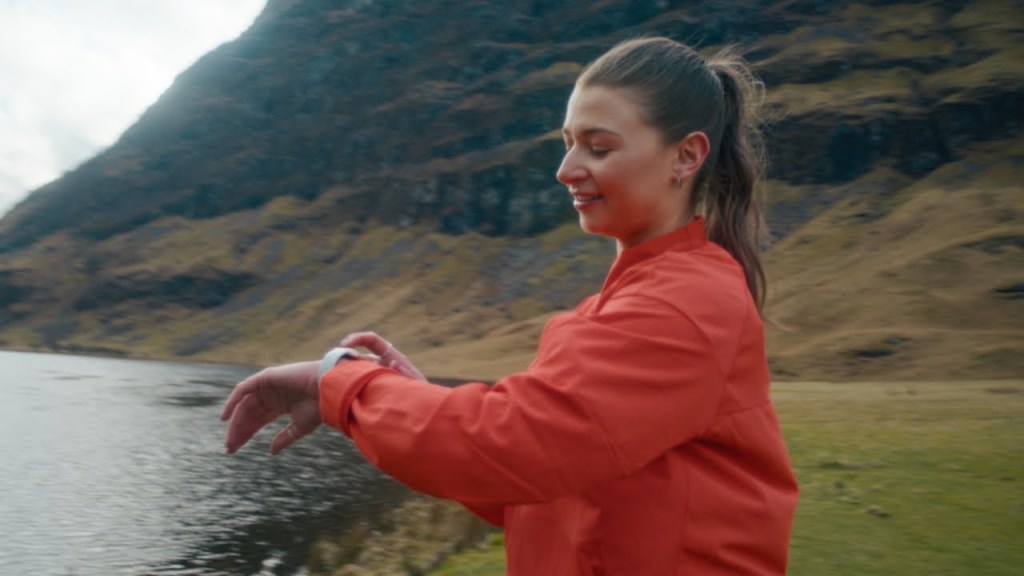
Knowledge is power
Is it more true that knowledge is power, or that ignorance is bliss? It’s now taken as a given that the hallmark of a progressive, modern civilization is the unstoppable acquisition of information. The more we know, the more certainty we can have about ourselves and our place in the world, and the further we can progress, towards, presumably, even more knowledge.
If this is true within the online space of scientific and political information, it is becoming increasingly true within the magical world of health tech, an industry worth over $200 billion in 2022, with a projected 15% growth this year. Capitalising on the modern mantra that ‘knowledge is power’, the health tech industry markets to us a glittering array of smart tech wearables, which supply us with insights into the internal, unseen mechanics of our bodies.
Track your heart rate, track your calories, track your sleep, track your blood glucose and for women, track your cycle. I sometimes wonder how humanity has managed to evolve to our current state without the modern miracle of constant self-tracking.
What smart watches and fitness trackers now provide is a level of data that, until fairly recently, only professional athletes would have been able to access. Ten years ago, many of us wouldn’t have felt the desire to know this kind of granular detail about our own bodies, let alone have invested hundreds of dollars in tracking and analysing them. But now the ubiquity of the smart watch is so commonplace that it’s more shocking to see someone wearing a dumb, ignorant, analog watch that merely tells the time.
This constant tracking and tampering with the functions of the average human body has been taken to the extreme by the likes of Bryan Johnson, the tech billionaire who has invested millions into his ‘Blueprint’ health protocol in an attempt to become the oldest man alive. His mission: don’t die. He’s garnered the label of ‘the most measured man in human history’, a kind of Promethean, or perhaps Frankensteinian, figure for the health tech industry to prod and poke at with their latest inventions. This level of bodily analysis is a twisted kind of 21st century self-reflection; it delves under the skin but still gets no closer to the true essence of inner self, human purpose, or meaning.
Your personal cheerleader
One of the health tech industry’s leaders, Fitbit, is advertised as ‘a little personal cheerleader that’s with [us] at all times’. In the UK ad, housing assistant Ellie tells us how, after struggling with her mental health, she started walking with her Fitbit. The data she collected inspired her to begin running, and she now completes a 5km run every day. Checking her stats keeps her motivated, and helps her to see her progress.
This is of course the brilliance, and the intended outcome, of smart watch tech; to help the amateur runner, swimmer or powerlifter improve their game, and allow us all to feel more in control of our health. Get better sleep, be more active, live a happier, healthier, longer life. Don’t die. What’s not to like?
Yet for a longstanding health anxiety sufferer like myself, having constant access to a wide range of stats detailing the inner functioning of my body was a recipe for disaster. I originally bought into the Fitbit hype in order to track my swims, because apparently counting the number of lengths I swam and multiplying the number by 25 was just too much hard work.
At first it was fun, seeing how far I’d swam and how many steps I’d taken each day; far more than my iPhone’s health app was collecting thanks to the fact that I’m not perpetually glued to my phone for every bathroom trip or tidying session. My watch gave me a little vibrating celebration when I hit my 10k steps goal, and congratulated me for completing an appropriate number of ‘zone minutes’ per day; time when my heart rate went above the 130bpm necessary for cardiovascular training.
It felt clunky and odd leaving it on my wrist overnight at first, but I soon got over the discomfort when I realised how fascinating it was to review my night’s sleep. I slept like a parrot one month, apparently, and a bear the next, and was shocked to find that 8 hours of unconsciousness in bed only amounted to a measly 6 hours and 25 minutes of actual sleep. The rest of the time was spent in a relentless pattern of waking up that I was oblivious to in my half-conscious state.
But soon this fascination and excitement turned into an obsession. Reaching my 10k steps became an obligation, and my walks around the park or into town became means to the end of reaching this goal (which it turns out is actually arbitrary and over-exaggerated anyway). I started to judge my energy levels based on how well my watch told me I’d slept, rather than how I actually felt in mind and body upon waking up. Checking my sleep score became the first thing I instinctively did in the morning, looking to my phone to tell me how well rested I was, rather than taking cues from my own body.
And then came the anxiety. The little buzz notifying me that I was achieving zone minutes started going off at the wrong times, and in the wrong places. When I smoked a cigarette, after having a few drinks, during a particularly emotional counselling session. Soon, checking my heart rate became another obsession, and my anxiety levels became dependent on that little number next to the flashing heart icon on my wrist. 94bpm sitting watching YouTube? Not good. 126bpm on a leisurely stroll to Tesco? Too high. 168bpm after a couple of hours in the middle of fabric’s packed dancefloor? I must have been on the verge of a heart attack.
I first began to notice my dependence on this device when, in the groggy early hours of one morning, having left my Fitbit on charge on the other side of my bedroom overnight, I checked my wrist only to find, with horror, a blank space, and a band-shaped dip in the empty expanse of skin where the watch usually rested. It was as if I had been branded by my Fitbit in some way; its absence marking a groove in my arm, my flesh growing dependently around it like a devil’s ivy curving around a tree trunk.
Going anywhere without my Fitbit left me feeling naked, anxious. It was the same feeling I had as a smoker when leaving the house without filter tips, or a lighter. The feeling of panic rising within my chest as I realised I’d been loosed into the wilderness without the soothing crutch of my addiction.
How had I survived 25 and a half years of my life without knowing this functional information about my body? How had my heart continued to beat, without my mind’s constant checking and monitoring of its rate? Before owning a Fitbit, I don’t think I’d ever checked my heart rate, other than once or twice during a Biology class or First Aid training. Now I couldn’t imagine my daily life without this ugly lump of metal and plastic attached to my wrist. I even wore it on first dates.
Like any safety-making behaviour, despite the increased anxiety I was feeling as a result of it, I was convinced that my Fitbit was helping me. Better to know my heart rate and be able to adapt my behaviour in response to it, than to not know it all, so my ‘knowledge is power’-influenced mindset reasoned. But this knowledge became like a bull-dog clip clamped around my heart, tightening its grip with every wrist check and increasing my nervous system’s overall tension – and, ironically, my heart rate – in the process.
The tipping point for my Fitbit anxiety came when my generalised fear and worry finally bubbled over into panic attacks. I started to realise that I was increasing my heart rate simply by noticing it, and being concerned by the number. One night, sat watching TV, I noticed my heart rate pumping along at a steady 120bpm, a number which I felt was disproportionately high for the level of activity I was engaged in, despite the alcohol and nicotine I had consumed earlier in the evening. The fear caused a surge in that miniscule flashing heart on my wrist to 140bpm, triggering a larger wave of panic. Caught in a catastrophic cycle, my heart rate climbed to 180bpm, and the attendant chest pain and breathlessness had me on my way to A&E, convinced I was having a heart attack.
The patient and compassionate doctor at St. George’s reassured me that I wasn’t the first person to have their smart watch bring them to his door, convinced of some cardiac irregularity that was simply the normal machinations of their heart. The woman sitting next to me in the waiting room was constantly pointing out her heart rate to her husband, shoving her watch-laden wrist under his nose periodically, which frustrated him as much as it panicked me during my 6 hours in the A&E waiting room. My diagnosis? A panic attack and an overindulgent few weeks of booze, weed and cigarettes.
After several more of these panic attacks, one more A&E visit, and multiple tests and checks on my heart from doctors, I finally recognised what I’d been doing to myself. There was nothing wrong with my heart, but these little numbers and notifications on my wrist had given an external quantification to the anxious symptoms I was feeling on the inside, feeding my fearful thoughts and overactive mind. Rather than my personal cheerleader, my Fitbit had metamorphosed into my personal tyrant and bully; silently fuelling my already active health anxiety and sending me into a psycho-spiral of panic and obsession that never gave me a break. My Fitbit was, ominously, as Ellie had found, with me at all times
Ignorance is bliss
I eventually realised that the Fitbit had to go. Like a toxic partner, I had put my trust in it, and it had given me nothing but pain, keeping me in denial whilst ostensibly providing me with safety and security. After much deliberation, I threw my £60 chunk of panic plastic in the bin. There was, surprisingly, a withdrawal period; the sudden loss of the safety behaviour of checking my heart rate led to an initial increase in anxiety. But I soon realised that knowing my numerical bpm only ever hindered, rather than helped, my anxiety levels. I slowly returned to exercise – the fear of a too high heart rate had kept me housebound and inert for weeks – quit smoking and drinking, and started to understand the mechanics of anxiety and panic. It turns out knowledge is power, sometimes.
I learned to accept my thumping, nervously charged heart rate, and even started to find comfort in its ceaseless drumming; the sound and feel of the life force that had kept me going through the most emotionally turbulent year of my life. The more I revered rather than feared my heartbeat, the softer and less noticeable it became, and the more I returned to trusting that it would continue to keep me alive whether I was checking on it or not.
What’s more, I discovered that how I felt in my body was more important than what the numbers on my Fitbit were telling me. Sometimes 5 hours of quality sleep left me feeling more energised than 9 hours of tossing and turning, and I could feel peaceful with a heart rate of 150bpm in the middle of a jog, and anxious with a heart rate of 84bpm sitting comfortably on the sofa. I began to measure my wellbeing by checking in on how I was feeling internally on a moment to moment basis, rather than checking the external flashes and numbers on my wrist.
I started to enjoy walks for their own sake again, rather than as a means to the end of hitting my 10k steps goal. I walked slowly and mindfully amongst nature, to be present with it, rather than charging past the beauty and stillness of the natural world in an effort to try and hit zone minutes with the briskness of my pace. My swims became about flow, presence and stamina. I returned to my private peace in the water – the mystical pull that had drawn me back to swimming as an adult in the first place – uninhibited by tracking lengths or heart beats, instead feeling into the rhythm of each stroke and breath, uninterested in how far I was going or how quickly. Eventually my bpm returned to the land of ignorance from which it came; that blissful place where what we don’t know, can’t hurt us.
Whilst smart watches are intended to empower us to control and improve our fitness, for me it was the silent trigger for an anxious spiral that left me screwed up in panic and fear about my own body. In our world of limitless knowledge, it turns out there are some things it’s better off not knowing. And in our frenzied desire to map out every data point of our bodies, we may forget to stop and smell the roses; to be present in what is passing us by on the outside, as we curve our backs and bury our heads in the need to control exactly what is happening to us on the inside. Don’t die; yes, but don’t be so concerned with evading death that you forget to live.
 The Jaded Optimist